

AI skin analysis from photos
The home and patient pages describe photo-based AI analysis that can identify skin diseases instantly or in seconds, helping users review a spot, rash, or lesion without waiting for an in-person visit.

Skinive is an AI skin scanner and mole checker for photo-based skin analysis at home and in clinical settings.
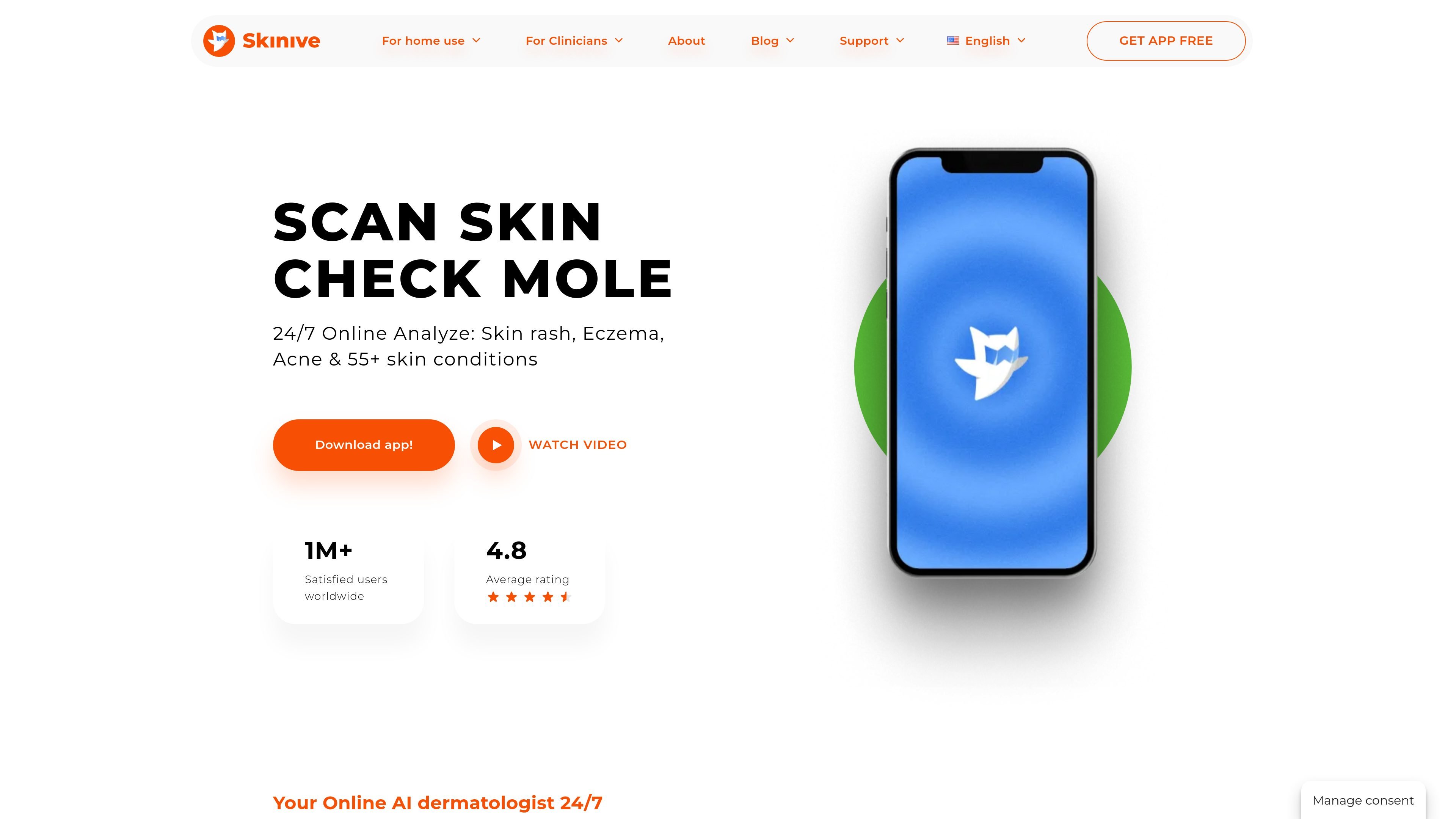
Skinive is an AI skin scanner and mole checker designed for both home users and medical professionals. The site presents it as a dermatology app and medical software that helps people analyze skin concerns from photos, track moles, and support routine skin self-exams.
For patients, the product is framed as a way to check a spot, rash, or lesion and get an AI-based assessment quickly. For clinicians, Skinive MD is positioned as a workflow tool for taking clinical pictures, reviewing likely skin conditions, and supporting triage or pre-assessment. The developer page also indicates an AI dermatology API and SDK for teams building related digital health or beauty products.
Across the site, Skinive emphasizes broad condition coverage, including acne, eczema, psoriasis, fungal infections, viral skin diseases, and cancer-related risks. The captured pages also state that the apps are CE-marked medical software and that the platform is used by people at home and by primary-care professionals.
The home and patient pages describe photo-based AI analysis that can identify skin diseases instantly or in seconds, helping users review a spot, rash, or lesion without waiting for an in-person visit.
The product is positioned around mole checking and skin self-exams, with weekly self-check guidance and a mole-scanning workflow for tracking changes over time.
The home page highlights 55+ skin conditions, while the specialist page states that more than 50 skin lesions can be detected by AI, covering acne, viral skin diseases, mycoses, pre-cancer, and skin cancer disorders.
The home page says the app uses AI-based real-time camera assistance to help users take better photos, which matters because image quality affects analysis.
The home page describes 3D full-body mole mapping as a way to increase accuracy and speed up documentation.
The specialist page describes patient triage output, helping healthcare professionals identify the right specialist for further assessment or treatment.
A person notices a new spot, rash, or mole and wants a quick photo-based check before deciding whether to seek care. Skinive is positioned for this kind of home self-check and follow-up monitoring.
A user wants to build a more regular skin self-exam routine. The site recommends weekly self-exams and presents the app as a way to make those checks more structured over time.
A GP, nurse, or clinician wants to take clinical photos, review likely conditions, and decide whether a patient should be referred to a specialist. The specialist page describes this as an AI-supported workflow for pre-assessment and triage.
A practice wants to document skin findings more efficiently and keep a visual record that supports follow-up visits. The site describes 3D full-body mole mapping and digital skin health maps as part of that workflow.
A product team wants to add dermatology analysis to a digital health or beauty app. The developer page positions Skinive as an AI dermatology API and SDK for that purpose.
Skinive is presented as an AI skin scanner and mole checker for spotting and tracking skin concerns from photos. The site also describes it as a symptom tracker and dermatology app for home users and clinicians.
The product pages describe a simple photo-based workflow: take a photo of the skin issue, let the app analyze it in seconds, and review the skin condition assessment or triage guidance.
The site says Skinive is available for patients at home, for doctors and clinicians, and for developers through an AI dermatology API and SDK.
The site shows Skinive App for home use and Skinive MD for medical practice. The pricing page also says users can download Skinive or Skinive MD for iOS and Android, but it does not show actual prices in the captured text.
The site states that Skinive Apps are CE-marked medical software. It also presents usage and clinical evidence pages, but the captured text does not provide a full regulatory or diagnostic disclaimer.
Traffic-Daten dienen nur als Referenz.

小艺 is Huawei’s AI smart assistant for Q&A, writing, document reading, code help, image recognition, and file drag-and-drop.

SupPixel AI is a web-based image enhancement and upscaling tool to improve resolution, clarity, and detail in photos and visuals, with background processing, credits, and plans.

TakeCareOS is a web platform for home care, disability, and aged care agencies, with rostering, billing, compliance, and AI admin tools.

LeadJarvis AI event lead capture scans business cards, enriches contacts, and sends personalized follow-up via WhatsApp and email for booth teams.

Empirical Health is a lab-based heart health program with a 100-biomarker panel, physician review, and in-app tracking for a broader cardiovascular risk check.

Regrow AI mobile app to track hair loss, get custom diagnostics, and follow AI-guided regrowth plans with personalized hair-care support.