

Works in existing warehouses
Yondu is positioned as a brownfield automation system, designed to work inside existing warehouse layouts and processes without requiring a facility redesign.

Yondu is an embodied AI platform for warehouse and logistics automation. It is designed to automate repetitive tasks in existing warehouses with off-the-shelf robots and without major infrastructure changes.
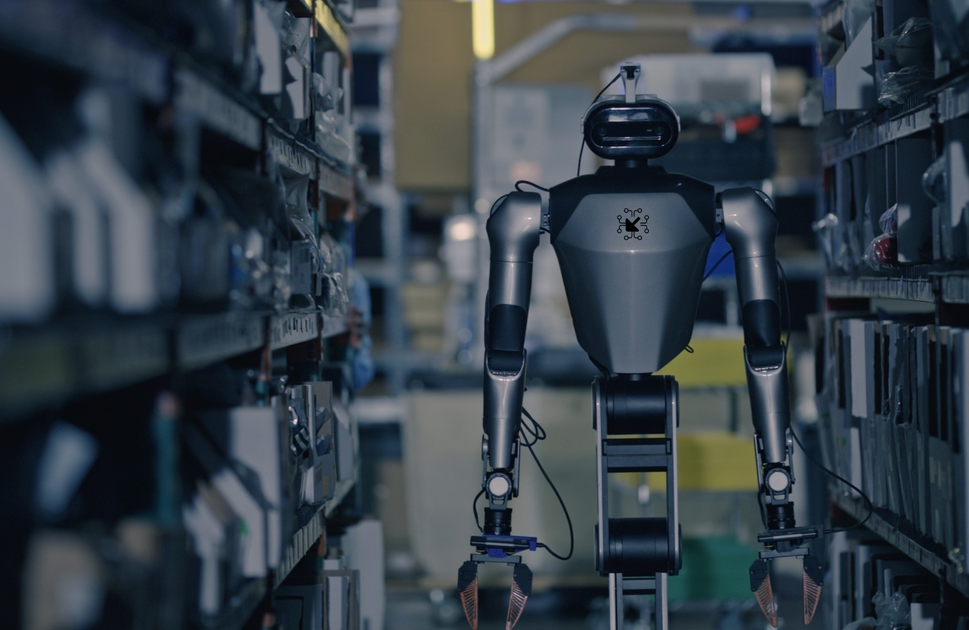
Yondu is an embodied AI platform for warehouse and logistics automation. The company says it builds drop-in robots for brownfield warehouses, meaning they are designed to fit into existing layouts and processes rather than require new infrastructure or a full facility rebuild.
The product pages focus on repetitive physical workflows that are hard to staff and easy to get wrong, especially bin picking, packing, and decanting. Yondu presents its system as a way to automate these tasks with off-the-shelf robot hardware while keeping operations running in place.
Yondu is positioned as a brownfield automation system, designed to work inside existing warehouse layouts and processes without requiring a facility redesign.
The site describes robotics that can navigate shelves, identify items, and pick and place SKUs within a warehouse environment.
Yondu says it automates repetitive physical workflows across warehouse and logistics operations, with examples including bin picking, packing, and decanting.
The company says its approach is intended to be drop-in and general-purpose for 3PL warehouses, with automation that can scale with demand.
Yondu frames its system as a coordinated workforce for warehouse jobs, moving from pilot to production with robots that learn and operate in real operations.
At Automate 2026, Yondu shows partner-facing demos including a stationary arm integrated with the METIS autobagger and a teleoperated steel chain sorting task.
Use Yondu to automate bin picking in warehouses where workers repeatedly sort, identify, and retrieve items from shelves or bins. The site says the robots can navigate shelves and pick and place SKUs inside the current layout.
Use the system to handle repetitive packing work in fulfillment lines, especially where order volume and staffing levels make manual packing costly. Yondu describes packing as a predictable task that it can integrate into existing fulfillment operations.
Apply Yondu at repetitive decanting or station-work areas where workers perform placing, packing, folding, or similar actions over long shifts. The site frames this as a way to reduce labor cost without retooling the station.
Use the partner demos as a reference for integrating robot workflows with specialized warehouse equipment, such as an autobagger. The Automate 2026 page shows Yondu’s stationary arm working with the METIS autobagger in a live packaging application.
Use teleoperated robot workflows for industrial sorting tasks that are difficult to staff or standardize. At Automate 2026, Yondu shows a teleoperated steel chain sorting demo built for a tier 1 automotive company.
Yondu is described as an embodied AI platform for warehouse and logistics automation. It is built to automate repetitive physical tasks such as bin picking, packing, and decanting with off-the-shelf robots.
The source positions Yondu for warehouses and 3PL operations that want to automate repetitive labor within existing layouts and processes. It is presented as a brownfield system, so it is meant to fit into current operations rather than require a new buildout.
Yondu’s site emphasizes deployment within existing warehouse layouts and processes, with no costly retrofits or new infrastructure required. The Automate 2026 page also shows partner hardware demos, including a stationary arm integrated with the METIS autobagger and a teleoperated sorting task with Foundova Robotics.
The site does not publish pricing and the pricing URL currently returns a 404 page. Visitors are directed to contact the Yondu team for next steps.
The source highlights bin picking, packing, and decanting as current applications, plus live demonstrations at Automate 2026. Beyond that, the public pages do not provide a full integration list or a detailed product spec.

Codesphere is a virtual cloud platform for development, deployment and operations across on-prem, cloud and hybrid infrastructure, with portability and security.

AppVision is a boutique app studio for iOS and Android, offering design, development, and growth with weekly releases and data-driven iteration.
Intract is a cross-border payments platform for businesses, with real-time settlement, multi-currency support, compliance handling, and transparent rates.

Newfront is a business insurance brokerage and software platform for commercial insurance, employee benefits, and retirement services.

Fullstory is a digital experience platform that captures behavioral context, supports analytics and guidance workflows, and offers AI-assisted insights.

Trunk is a CI reliability platform for detecting flaky tests, quarantining failures, and managing merge queues in GitHub workflows. Free and paid plans available.