

Photo-based breed identification
Upload a dog photo and let the AI identify the most likely breed from the visible characteristics in the image.

Dog Breed Identifier is a free web app that analyzes a dog photo to estimate breed, with simple tips to improve results.
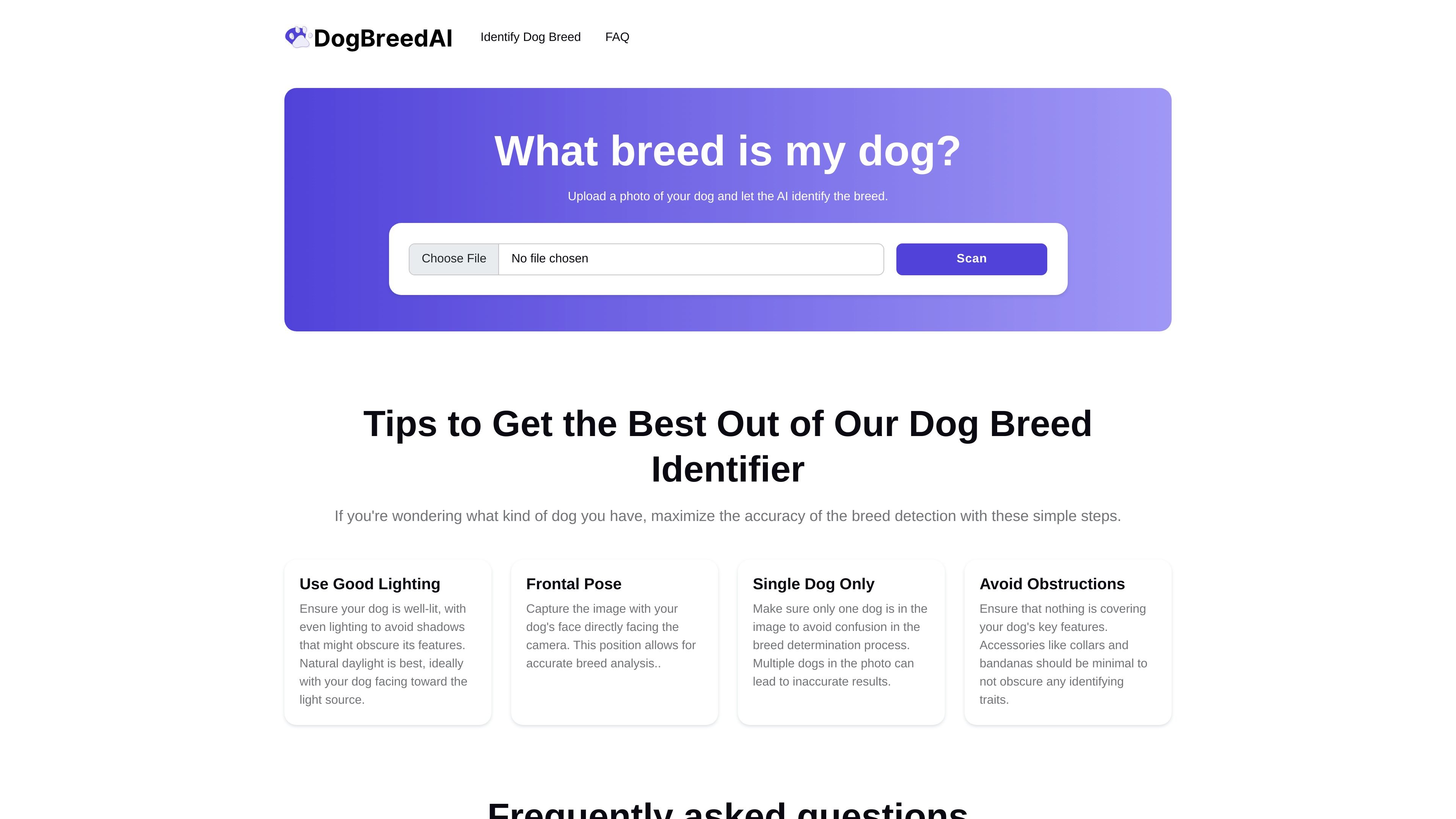
Dog Breed Identifier is a web-based AI tool that analyzes an uploaded dog photo to estimate the dog’s breed. It is designed for people who want a quick answer from a single image rather than a manual breed lookup.
The site explains that the model examines visible physical traits such as ear shape, muzzle length, fur pattern, coat color, facial structure, and body proportions, then compares those traits with a database of known breeds. It also gives simple photo tips to improve accuracy, including using good lighting, a frontal pose, one dog per image, and minimal obstructions.
Upload a dog photo and let the AI identify the most likely breed from the visible characteristics in the image.
The analysis looks for breed-defining traits including ear shape, muzzle length, fur pattern, coat color, facial structure, and body proportions.
The system compares the extracted traits against a database of known dog breeds to determine the result.
The site gives photo guidance for better results, including good lighting, a frontal pose, a single dog in frame, and minimal obstructions.
Uploaded photos are described as not permanently stored and used only for the analysis step.
The service is presented as free to use, with no usage cap mentioned on the site.
A dog owner can upload a clear photo to get a quick breed estimate without comparing visual traits manually.
When a photo result looks uncertain, the scan tips help users retake the image with better lighting, a frontal pose, and fewer distractions.
People can test multiple pictures of the same dog to see which image produces the most consistent breed analysis.
Because the service is free and web-based, casual visitors can use it without creating a pricing decision or committing to a subscription.
Users concerned about privacy can use the service knowing the site says uploaded photos are not permanently stored.
The service analyzes an uploaded dog photo with AI and compares visible breed-defining traits such as ear shape, muzzle length, fur pattern, coat color, facial structure, and body proportions against a breed database.
Yes. The site says uploaded photos are not permanently stored on the server and are used only for analysis.
Yes. The service is described as completely free, with minimal advertising supporting it.
The analysis is optimized for clear, well-lit photos of a single dog facing the camera. Obstructions, multiple dogs, and poor lighting can reduce accuracy.
You can use the service as often as you like; the site says there are no limits on the number of analyses.

小艺 is Huawei’s AI smart assistant for Q&A, writing, document reading, code help, image recognition, and file drag-and-drop.

SupPixel AI is a web-based image enhancement and upscaling tool to improve resolution, clarity, and detail in photos and visuals, with background processing, credits, and plans.

Peridot by Niantic blends AI pets, augmented reality, and spatial computing across mobile, MR headsets, AR glasses, and web AR.

LeadJarvis AI event lead capture scans business cards, enriches contacts, and sends personalized follow-up via WhatsApp and email for booth teams.

Manga Translator is an AI browser extension for Chrome and Edge that translates manga, manhwa, manhua, comics and webtoons into 100+ languages as you read online.

Block Blast Cheat is a free online solver for Block Blast puzzles that analyzes a screenshot of the current board and suggests the best moves. It works in the browser and supports screenshots from iPhone, iPad, Android, and tablets.