

Audio and video transcription
Upload audio or video files to generate clean transcripts directly from media files, with the audio and video landing pages describing instant transcription and 99% accuracy precision.

Dictationer is an AI transcription tool that turns uploaded audio, video, and social links into transcripts, captions, summaries, translations, and drafts.
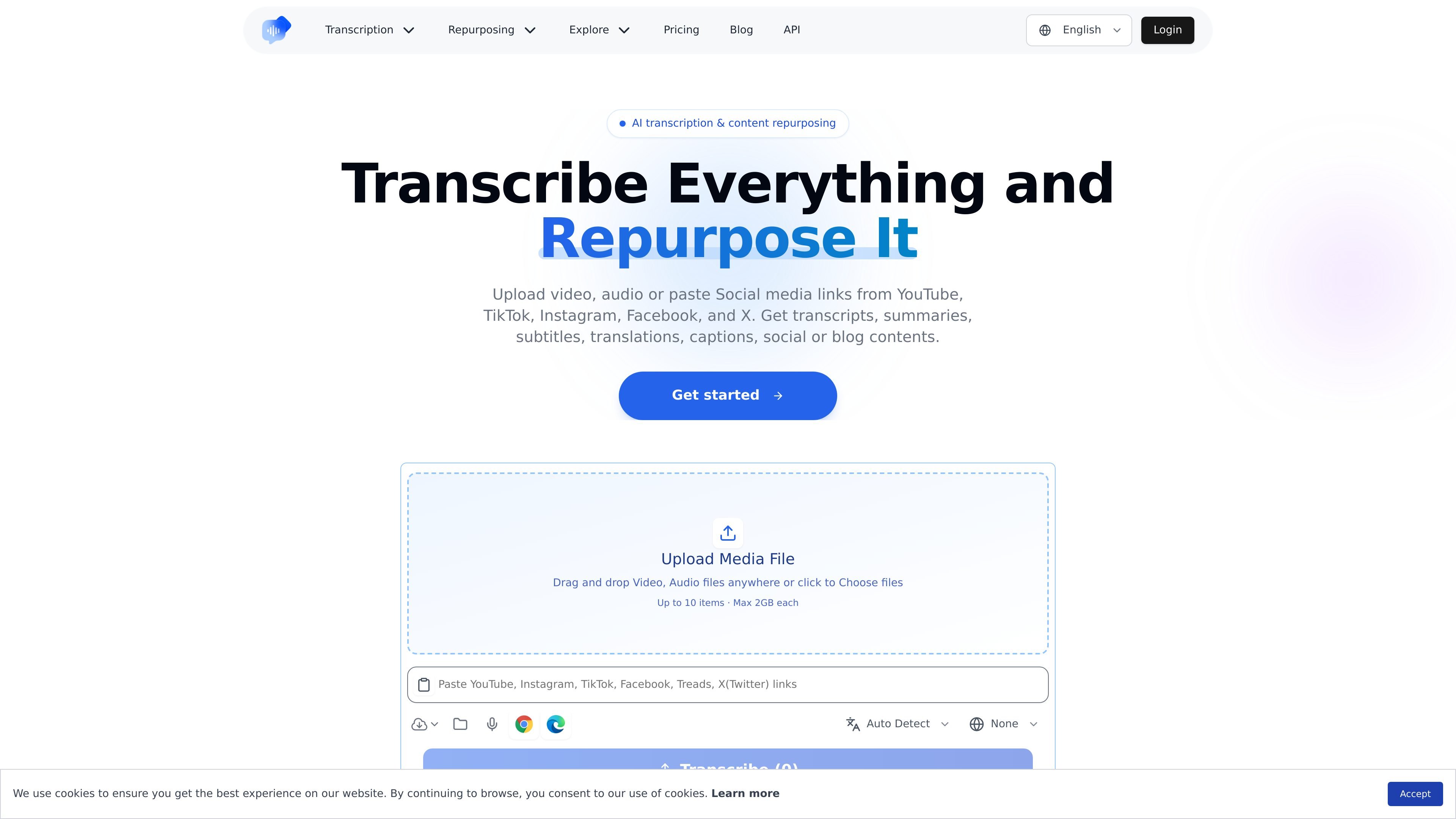
Dictationer is an AI transcription and content repurposing tool built around audio, video, and social media sources. Its home page positions the product as a way to upload media or paste links from YouTube, TikTok, Instagram, Facebook, and X, then turn that source into transcripts and downstream content.
The product is aimed at people who need fast text versions of recordings and clips, especially creators, marketers, podcasters, editors, and startup teams working from short-form video, webinars, interviews, or social posts. In addition to transcription, the site presents summaries, subtitles, translations, captions, and social or blog content as part of the workflow.
Upload audio or video files to generate clean transcripts directly from media files, with the audio and video landing pages describing instant transcription and 99% accuracy precision.
Paste links from supported social platforms so the product can work from online clips instead of requiring a download first; the homepage lists YouTube, TikTok, Instagram, Facebook, and X.
Create multiple text outputs from the same source, including summaries, subtitles, translations, captions, and social or blog content, rather than stopping at a plain transcript.
Use the pricing page’s feature list to understand the product as an AI transcription service that also includes auto caption, translation, and summarization in its plan set.
Earn referral credits by sharing a personal link; credits are added automatically when a referred user registers or subscribes, and can be used for premium features.
Upload recorded interviews, voice notes, or meetings and turn them into clean text that is easier to scan, quote, and edit than the original audio.
Paste a YouTube, TikTok, Instagram, Facebook, or X link and use the resulting transcript as the starting point for captions, hooks, summaries, or posts.
Use the translation and subtitle outputs to prepare the same source content for different audiences or publication formats.
Turn webinars and other longer recordings into ready-to-post drafts that a creator, marketer, or operations team can adapt for publishing.
Dictationer supports uploading audio and video files, and it also accepts social media links from YouTube, TikTok, Instagram, Facebook, and X for transcription and repurposing workflows.
The source pages describe outputs such as transcripts, summaries, subtitles, translations, captions, and social or blog content. The product pages also mention auto caption, transcription, translation, and summarization in pricing-related copy.
The free-credit page says credits are required for premium features, and it describes credits being used for advanced dictation features, expanded storage, priority processing, and other premium tools.
The source pages do not describe a team workspace or collaboration setup in detail. They do show that people use the product to turn clips and recordings into ready-to-post drafts, which can support individual or team workflows.
The page text does not list hard limits for file types, duration, languages, or output volume. It does show separate workflows for audio-to-text, video-to-text, and link-based content processing.

Postfity is a social media management tool for scheduling, planning, publishing, and tracking posts across connected accounts. Includes analytics, inbox management, AI tools, team workflows, and Free and paid plans.

Altered is an AI voice changer and voice content creation platform for media production and live voice use. It combines voice morphing, text-to-speech, transcription, translation, cloning, and editing in one application.

Subtitle Translate AI is a browser-based subtitle translation tool for SRT and related files. Translate subtitles into 100+ languages while preserving timing, formatting, and context.

讯飞会议 cloud video conferencing for enterprise collaboration, with video meetings, AI transcription and translation, and automatic meeting notes. Public and private cloud.

Noiz is an AI YouTube video summarizer that turns videos into key points, Q&A-style takeaways, timestamped summaries, or readable text. It is aimed at people who want to review, study, or scan YouTube content faster without watching it end to end.
Immersive Translate is a bilingual AI translation tool and browser extension for websites, PDFs, subtitles, meetings, images, and comics with privacy-focused translation.